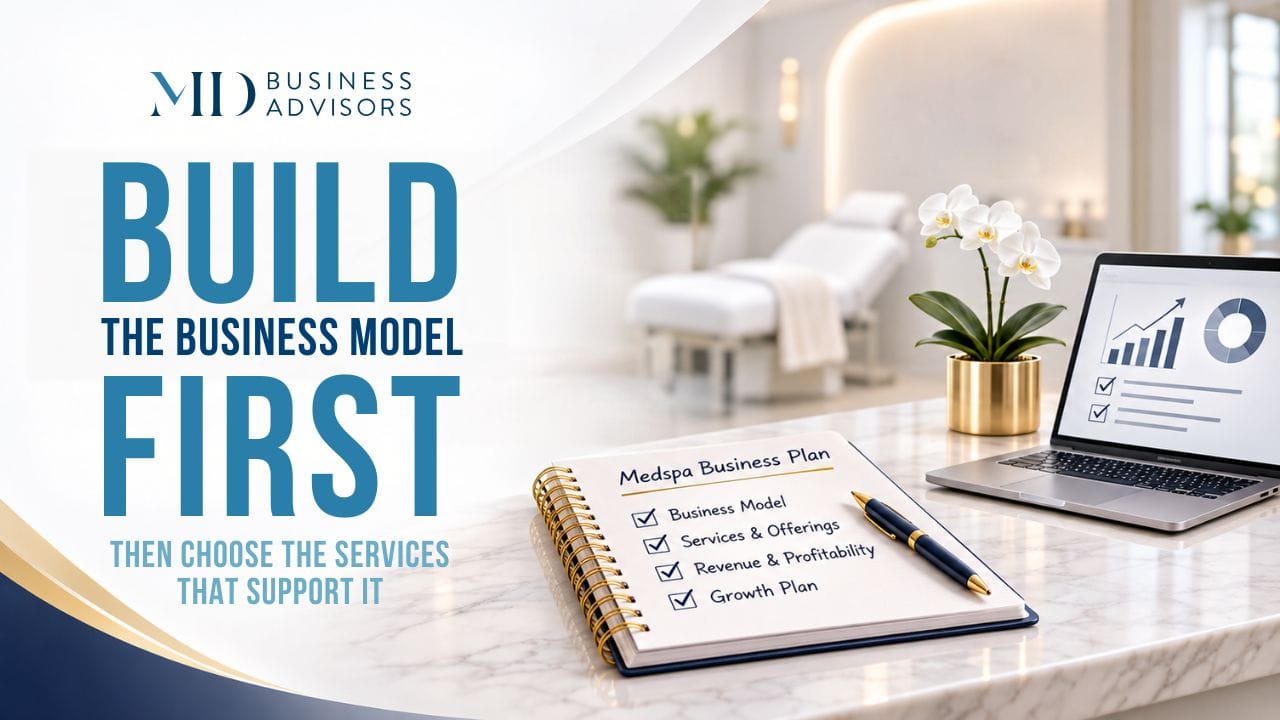
Medspa Business Model
If you own a medical aesthetics or wellness practice, there’s a good chance your business was built around a treatment menu. You chose services based on your training, what was popular, and what devices were available. Then you opened the doors and figured out the business side along the way.
That’s the most common path. It’s also why so many practices end up busy but not profitable.
A medspa is a serious business first and a menu of treatments second. When you build in that order, every service you offer has a job, a margin, and a place in a larger model.
The typical path to opening a practice starts with treatments. The owner decides what to offer based on:
They lease a space, buy equipment, create a menu, set prices, and open. The business side – pricing logic, revenue model, team structure, financial planning, client journey – gets figured out along the way, if at all.
The assumption is that good services delivered well will produce a good business. Sometimes they do. More often, the practice ends up busy but not profitable.
Clinical training is organized around what a provider can do: procedures, treatments, protocols. So when clinicians become owners, they naturally think of the practice as a collection of services.
"We offer injectables, lasers, body contouring, and IV therapy" feels like a description of the business. But it's a description of the menu.
A menu says what the practice sells. It doesn't say how the practice makes money, keeps clients, grows, or runs without the owner.
Almost every voice in the industry pushes owners toward services-first thinking:
Everyone encourages owners to add, expand, and upgrade the menu. Very few ask whether the business model underneath can support it. The result is an impressive menu built on a foundation no one designed.
This pattern shows up across medspas, functional medicine practices, regenerative medicine clinics, longevity and anti-aging practices, and other cash-based businesses. When services come first and the business is an afterthought, the same five problems appear. Each one comes from building in the wrong order.
A service can be popular, clinically effective, and in demand – and still lose money once you count product costs, provider time, room use, and equipment payments.
When services come first, no one runs those numbers before launch. The schedule fills with treatments that keep the team busy and generate little profit. The owner discovers this later, if they ever look.
A device gets bought because it enables an attractive service. But no one calculated:
The payments start immediately. Demand builds slowly, or not at all. The device becomes a monthly expense instead of a profit center.
Services-first practices tend to keep adding: another treatment, another device, another product line. Each addition brings more training, more inventory, more marketing, and more decisions for the team.
But adding services doesn't fix a weak business model. It spreads that model across more offerings. A long menu on an undefined business model is still an undefined business model.
When the practice is organized as a list of individual treatments, clients buy one service at a time. There's no pathway connecting one visit to the next, no membership creating recurring revenue, and no program guiding the client toward a larger outcome.
Every month starts from zero. The menu sells treatments. It doesn't build a business.
In a services-first practice, the team is trained on treatments: how to perform them, how to describe them, and what they cost. They’re rarely trained on:
They become experts on the menu and disconnected from the business.
MDBA starts from the opposite direction. First, design the business model. Then choose and structure services to support it. That reversed order is the foundation of everything MDBA teaches.
In a business-first practice, services are part of the model instead of being the model. Each one has a defined role:
Each service is priced to meet a margin target, positioned to support the practice’s identity, and placed within a structured client journey.
The menu isn’t a catalog of everything the practice can do. It’s a deliberate selection of what the business model needs.
When a device rep presents new technology, a business-first owner asks:
If the answers don't support the model, the purchase doesn't happen, no matter how exciting the technology is. The model protects the practice from expensive decisions made on enthusiasm.
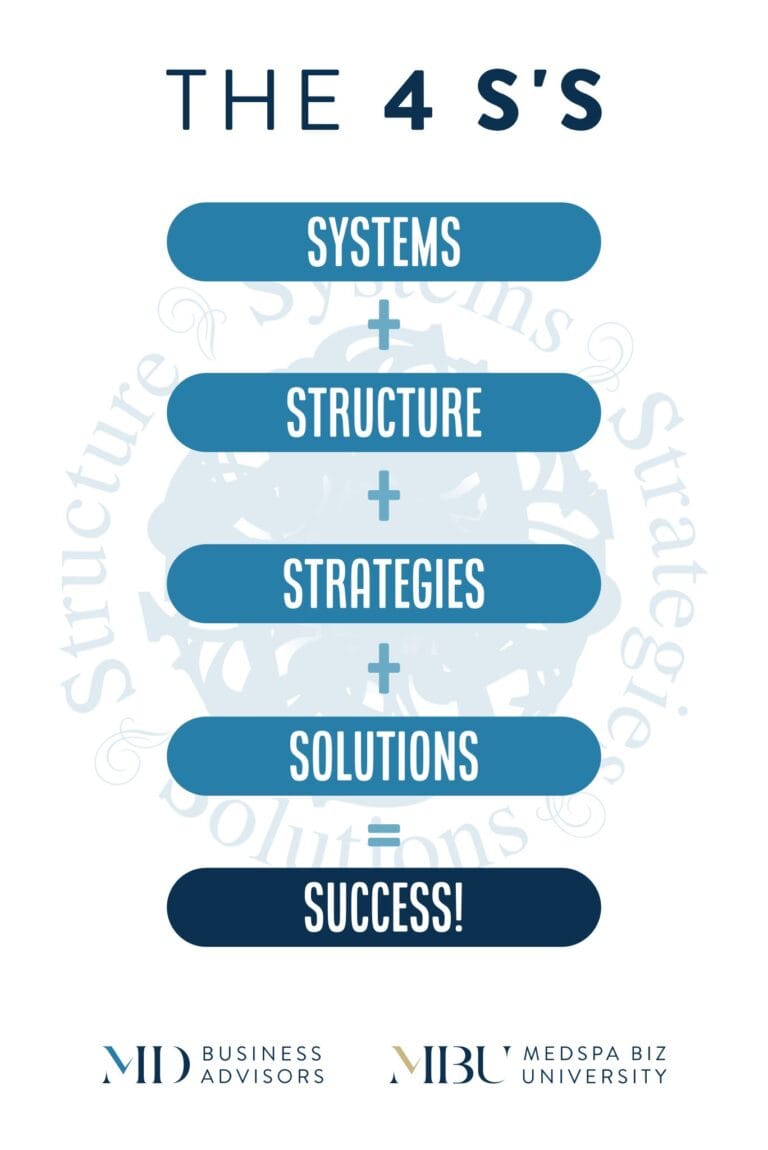
MDBA’s 4 S’s framework gives owners a clear way to build business-first:
When services are chosen to support the model, each one contributes. Underperforming services get repriced, repackaged, or removed. New services are added only when they fit. The menu may get shorter, but more of it is profitable.
Because the model includes recurring revenue from the start, the practice doesn't depend entirely on this month's individual bookings. Memberships and programs create a baseline that carries forward. Growth adds to what you've built instead of starting over every month.
With a defined model, the team can be trained on how the practice actually works: which services matter most, how to guide clients into programs, what their role is in revenue, and how their performance is measured. They become contributors to the business instead of operators of a menu.
This is the most important shift. You stop thinking of the practice as "what we offer" and start thinking of it as "how this business works." Decisions get easier because you have a model to check them against.
Your practice is still built on excellent clinical care. Now that care sits inside a business designed to make it sustainable and profitable.
If you built your practice services-first, you don’t need to start over. You can step back, define the business model, and then realign your existing services to support it by:
If you’re still preparing to open, you have the advantage of building in the right order from day one.
If your practice was built around services and you're ready to build the business model underneath them, a complimentary Private MBU Growth Tour can show you how the 4 S's framework works inside MedSpa Biz University. It's a 30-minute, one-on-one walkthrough personalized to your stage and goals, with over $1,000 in business growth gifts.
Still planning your practice? The free START Business Tools can help you design your business model, pricing, and launch plan before you commit to a menu.

Make 2027 the year your vision becomes an actionable plan. Join Brooke Bermingham and JR Burgess to identify your greatest growth constraint, set clear priorities, and map your first 90 days.